

Keeping a toilet clean is one of those household tasks that most people would rather make as quick and simple as possible. Traditional toilet cleaning often involves applying liquid cleaner, scrubbing difficult stains, waiting for the product to work, and then rinsing or flushing everything away. FlushCleanse Toilet Cleaning Foam is presented as an alternative designed to make routine toilet cleaning more convenient through a foaming formula.
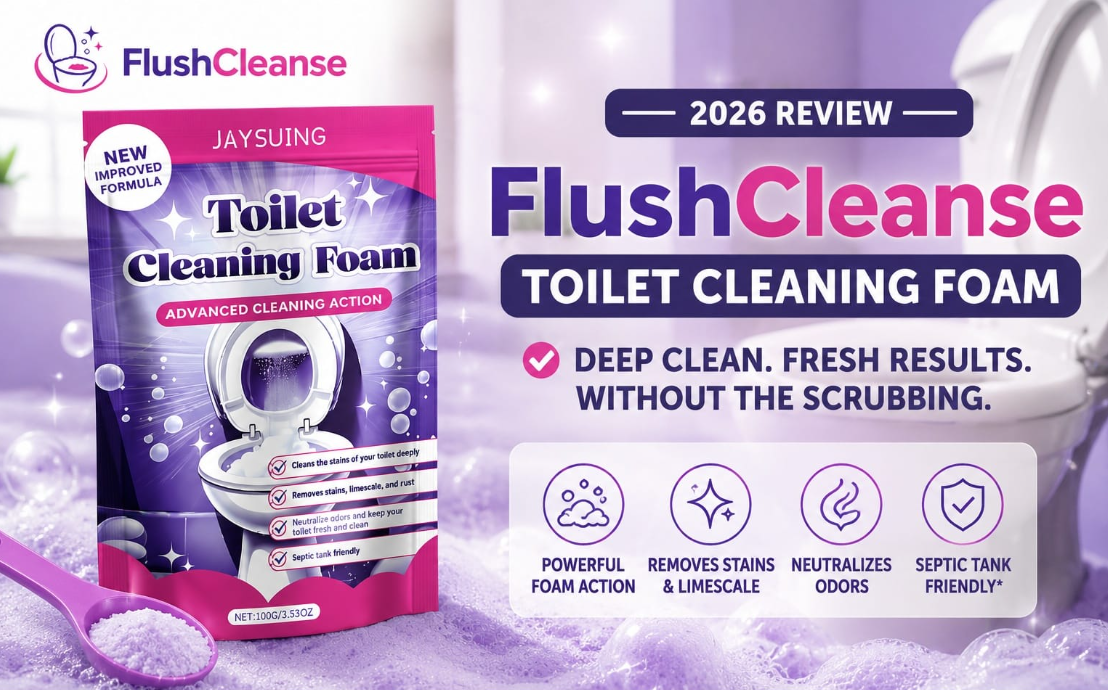
The product shown in the supplied packaging is a 100-gram toilet cleaning foam marketed under the FlushCleanse presentation, with the package identifying the product as a “new improved formula” and highlighting advanced cleaning action. Its promotional messaging focuses on deep cleaning, stain and limescale removal, odor neutralization, and a septic-tank-friendly formulation.
But what exactly is FlushCleanse, how is it intended to be used, and what should consumers consider before buying it? This review takes a closer look at its advertised features and practical role in everyday bathroom cleaning.
What Is FlushCleanse?
FlushCleanse is a toilet cleaning foam designed to help remove common toilet-bowl buildup while making the cleaning process less dependent on heavy scrubbing. Unlike conventional liquid toilet cleaners, a foam-based product is intended to spread across surfaces and remain in contact with them long enough to work on dirt and residue.
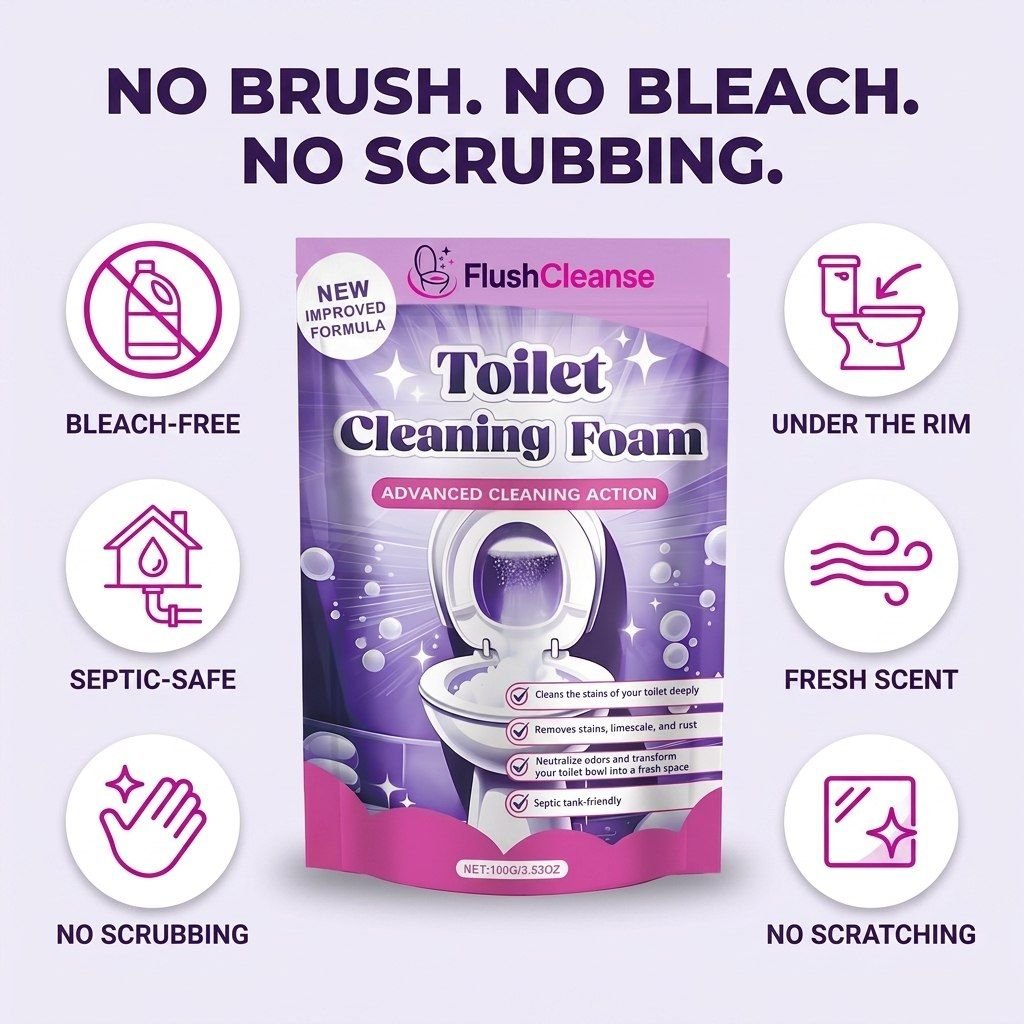
The packaging shown in the product image describes FlushCleanse as a “Toilet Cleaning Foam” and emphasizes “advanced cleaning action.” It also highlights four main product features: powerful foam action, stain and limescale removal, odor neutralization, and septic-tank-friendly use.
The basic idea is straightforward. Instead of relying entirely on mechanical scrubbing to remove bathroom buildup, the cleaning formula is intended to loosen or break down deposits so they can be rinsed away more easily.
As with any household cleaning product, actual results can depend on the condition of the toilet, the type of buildup present, water hardness, application technique, and how long the product is allowed to work.
Why Toilet Cleaning Can Be Difficult
Toilet bowls are exposed to water, minerals, organic residue, and bacteria on a regular basis. Over time, these factors can contribute to visible discoloration, unpleasant smells, and mineral deposits.
Limescale is particularly common in areas with hard water. Minerals dissolved in water can gradually form deposits on toilet surfaces. Once these deposits become established, ordinary flushing may not remove them.
Another issue is staining. A toilet may appear clean immediately after flushing but still develop a ring or patches of discoloration over time. Odors can also remain when residue accumulates in areas that are difficult to reach.
These problems explain why toilet cleaning products increasingly focus on formulas that combine cleaning action with easier application. A foaming product such as FlushCleanse is positioned around this convenience-oriented approach.
Key Features of FlushCleanse
1. Foaming Cleaning Action
The most noticeable feature of FlushCleanse is its foam-based format. Foam can provide broad surface coverage, allowing the cleaning solution to come into contact with different areas of the toilet bowl.
The product packaging specifically promotes “powerful foam action.” The objective is to help loosen dirt and buildup while reducing the amount of manual effort required.
However, “less scrubbing” should not necessarily be interpreted as “no cleaning effort under every circumstance.” Heavy mineral deposits and old stains can require additional treatment or physical cleaning.
2. Helps Target Stains and Limescale
FlushCleanse is advertised as helping remove stains, limescale, and rust. These are among the most common visual problems associated with toilet bowls.
Limescale can be especially stubborn because mineral deposits can harden over time. A suitable cleaning formula may help loosen these deposits, making them easier to remove.
For older or particularly thick buildup, users should follow the product’s directions rather than assuming a single application will completely restore the surface.
3. Odor Neutralization
The product also highlights odor neutralization. Bathroom odors can originate from residue, mineral buildup, drainage issues, or other sources, so cleaning the visible bowl is only one part of maintaining a fresh-smelling bathroom.
A cleaner designed to address residue can contribute to a fresher toilet, while regular bathroom ventilation and proper maintenance remain important.
4. Septic-Tank-Friendly Claim
One of the claims displayed prominently on the packaging is “septic tank friendly.”
This feature may be particularly relevant for households that use septic systems rather than municipal sewage. However, consumers should always check the complete product label and manufacturer’s instructions for compatibility with their specific septic setup.
A product’s general marketing claim should not replace following local plumbing, septic-system, or manufacturer guidance.
How FlushCleanse May Work
The principle behind a foaming toilet cleaner is relatively simple. The formula is introduced into the toilet bowl, where it produces foam and spreads across the surface. The active cleaning ingredients are then intended to interact with dirt, stains, mineral deposits, or other residue.
The foam format can make the application visually obvious because users can see where the product has been distributed.
Depending on the product instructions, the cleaner may need to remain on the surface for a specified amount of time before flushing or rinsing. Allowing a cleaner to work for its recommended contact time can be important, particularly when dealing with buildup.
Consumers should always follow the instructions printed on the actual package because formulations and recommended application methods can change.
How to Use a Toilet Cleaning Foam
Using FlushCleanse should begin with reading the product label carefully. The packaging and any included instructions should take priority over general cleaning advice.
A typical toilet-cleaning routine may involve the following steps:
Step 1: Prepare the toilet.
Flush the toilet if necessary and make sure the bowl is ready for cleaning.
Step 2: Apply the product according to the label.
Use the recommended amount of FlushCleanse and distribute it according to the manufacturer’s instructions.
Step 3: Allow the foam to work.
Give the product the recommended contact time. Avoid unnecessarily extending the contact period unless the manufacturer specifically permits it.
Step 4: Focus on difficult areas.
If stains or mineral deposits remain, appropriate brushing may be necessary. Particularly stubborn buildup may require repeated cleaning.
Step 5: Flush or rinse as directed.
Complete the cleaning process according to the product instructions.
Users should also wash their hands after cleaning and keep household cleaning products away from children and pets.

FlushCleanse Benefits
Based on the features presented on the packaging, FlushCleanse is designed around several practical benefits.
Convenient Bathroom Maintenance
A foaming format can make routine cleaning easier to manage. Instead of applying a large amount of liquid cleaner and immediately watching it run down the bowl, foam is designed to provide visible coverage.
Potentially Less Manual Scrubbing
The product is promoted around deep cleaning without extensive scrubbing. For routine residue and lighter buildup, this may help reduce the amount of physical effort required.
Addresses Multiple Cleaning Concerns
Rather than focusing on only one issue, FlushCleanse is marketed for stains, limescale, rust, and odors. A multi-purpose approach can be convenient for regular toilet maintenance.
Fresh-Smelling Results
Odor neutralization is another feature highlighted by the packaging. A thoroughly cleaned toilet can contribute to a more pleasant bathroom environment.
Suitable for Regular Cleaning
A dedicated toilet cleaner can be useful as part of a consistent bathroom-cleaning routine. Regular maintenance is generally easier than waiting until thick deposits have accumulated.
FlushCleanse vs. Traditional Toilet Cleaners
Traditional toilet cleaners come in several forms, including liquids, gels, powders, tablets, and foams. Each format has advantages and limitations.
Liquid cleaners can be easy to pour but may quickly run down smooth surfaces. Gels are often designed to cling to the bowl for longer contact. Tablets can provide convenience but are generally intended for ongoing maintenance rather than targeted stain removal. Foam products aim to combine visible coverage with a relatively simple application process.
FlushCleanse’s main point of differentiation is therefore its foam format and its focus on reducing the need for intensive scrubbing.
The best option ultimately depends on the user’s toilet condition, cleaning frequency, water quality, and personal preferences.
Is FlushCleanse Worth Considering?
FlushCleanse may be worth considering for consumers looking for a convenient toilet-cleaning product that focuses on foam coverage and routine maintenance.
Its packaging highlights several useful cleaning objectives, including stains, limescale, odors, and general buildup. The product is also presented as having a new improved formula and being septic-tank friendly.
However, buyers should maintain realistic expectations. No household cleaning product should automatically be expected to remove every type of stain instantly. Old mineral deposits, heavy rust, and deeply established buildup may require repeated treatment and manual brushing.
It is also important to distinguish marketing claims from independently verified performance. The supplied product image provides information about the features promoted by the packaging, but it does not independently establish laboratory performance or guarantee a particular result.
Safety and Usage Considerations
Toilet cleaning products should be handled carefully. Always read the manufacturer’s instructions before use and follow the recommended amount and contact time.
Do not mix toilet cleaners with other household chemicals unless the manufacturer explicitly states that doing so is safe. Mixing cleaning chemicals can produce hazardous fumes or unwanted chemical reactions.
Use appropriate ventilation while cleaning, avoid direct contact with the eyes and skin, and store the product securely away from children and animals.
If you have a septic system, follow the product’s septic-use instructions and consider any recommendations provided by your septic-system manufacturer or service professional.
Final Verdict
FlushCleanse Toilet Cleaning Foam is positioned as a convenient solution for people who want an easier approach to routine toilet maintenance. Its packaging emphasizes powerful foam action, stain and limescale removal, odor neutralization, and septic-tank-friendly use.
The biggest attraction is the foaming format. By spreading across the toilet bowl, the product is intended to provide cleaning coverage while potentially reducing the amount of scrubbing needed for everyday residue.
For households dealing with regular toilet stains, mineral buildup, and unpleasant odors, FlushCleanse could be an option to consider as part of a consistent cleaning routine. Nevertheless, results will depend on the severity and type of buildup, and stubborn deposits may still require brushing or additional treatment.
Overall, FlushCleanse is best viewed as a convenience-focused toilet cleaning foam rather than a guaranteed replacement for all forms of manual cleaning. Used according to its label directions and combined with regular bathroom maintenance, it may provide a practical way to keep the toilet looking cleaner and smelling fresher.