

In recent years, artificial intelligence has moved beyond traditional applications such as search, automation, business analytics, and content creation. AI-based systems are now being introduced into entertainment, probability analysis, and number-based games as well. Apollo Intelligence is presented as an AI-powered lottery prediction engine designed around the idea of using data, patterns, and computational analysis to help lottery players make more informed number selections.
The product shown in the accompanying image has a futuristic design featuring lottery balls, numerical combinations, money imagery, and the name APOLLO prominently displayed. It is positioned as an advanced prediction concept that attempts to bring artificial intelligence into the world of lottery number analysis.
But what exactly is Apollo Intelligence, how might an AI prediction engine work, and what should users realistically expect from such a system? This article takes a closer look.
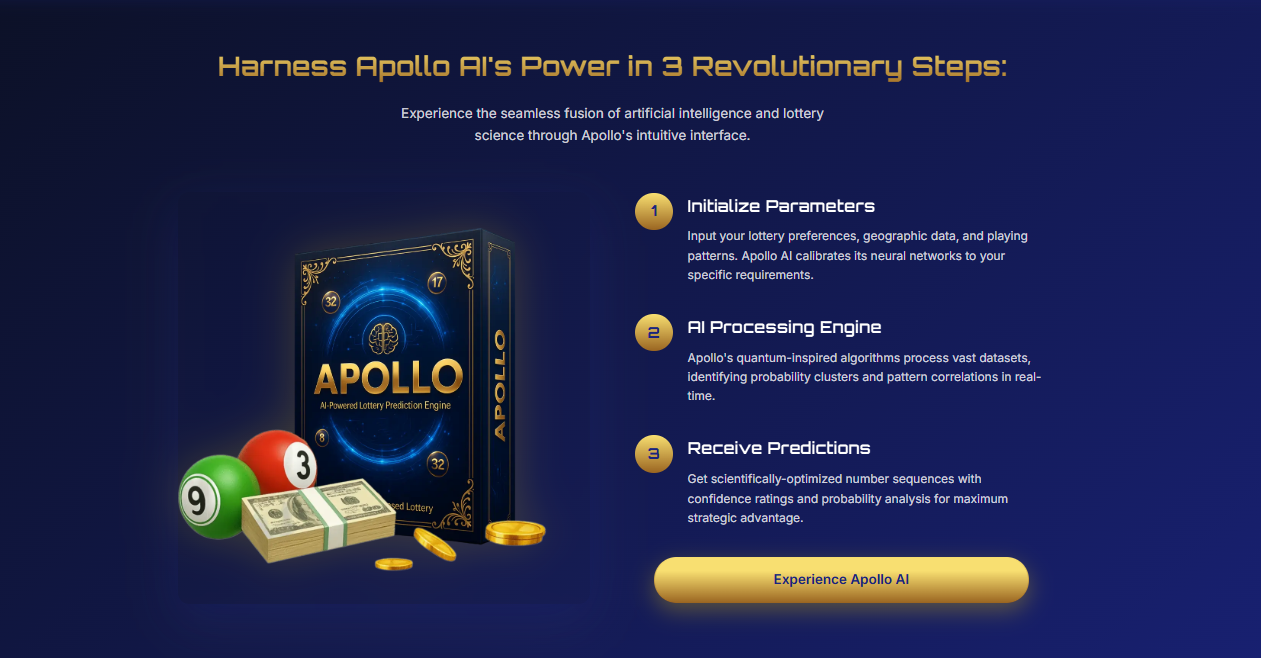
What Is Apollo Intelligence?
Apollo Intelligence can be described as a lottery-focused prediction and number-analysis concept that uses artificial intelligence and data-driven methods to generate or evaluate potential lottery combinations.
Traditional lottery selection is usually based on personal preferences, birthdays, favorite numbers, quick picks, or completely random choices. An AI-powered platform takes a different approach. Instead of relying exclusively on intuition, it may examine historical lottery information and apply statistical or computational techniques to identify numerical patterns.
The central idea behind Apollo is therefore data analysis rather than guesswork.
However, an important distinction should be made. Lottery drawings are generally designed to be random. Previous winning numbers do not guarantee future outcomes, and an algorithm cannot reliably predict a genuinely random future draw. Therefore, Apollo Intelligence should be viewed as an analytical or entertainment tool rather than a guaranteed method for winning.
How Does an AI Lottery Prediction Engine Work?
An AI-powered lottery system can potentially process large amounts of historical information much faster than a person could manually analyze it.
Depending on the actual features of a particular platform, an AI lottery engine may examine factors such as:
- Historical winning numbers
- Number frequency
- Number distribution
- Odd and even combinations
- High and low numbers
- Number ranges
- Repeated combinations
- Gaps between appearances
- Statistical relationships
- Historical draw patterns
The system can then organize these observations into a more accessible format.
For example, if certain numbers have appeared more frequently within a selected historical period, an analytical engine might classify them as “frequent” numbers. Numbers that have appeared less often might be categorized differently.
That information can help users understand historical data, although it does not mean that a frequently occurring number has a greater mathematical probability of appearing in the next independent draw.
The Role of Artificial Intelligence in Apollo
The most interesting aspect of Apollo Intelligence is its emphasis on artificial intelligence.
AI can analyze datasets containing thousands or millions of records and identify relationships that would be difficult to spot manually. In a lottery context, this could mean quickly examining historical draws and producing statistical summaries.
An AI system could potentially be used to:
Analyze Historical Data
Historical lottery results can contain a considerable amount of numerical information. AI can organize this data and identify frequencies, distributions, and other measurable characteristics.
Generate Number Combinations
Rather than asking players to manually create dozens of combinations, a prediction engine may generate selections according to predefined analytical criteria.
Identify Statistical Patterns
The software may highlight patterns involving odd and even numbers, consecutive numbers, number ranges, or frequency distributions.
Simplify Data Interpretation
One advantage of automation is presentation. Instead of looking through spreadsheets filled with previous lottery results, users can receive summarized information in a more understandable format.
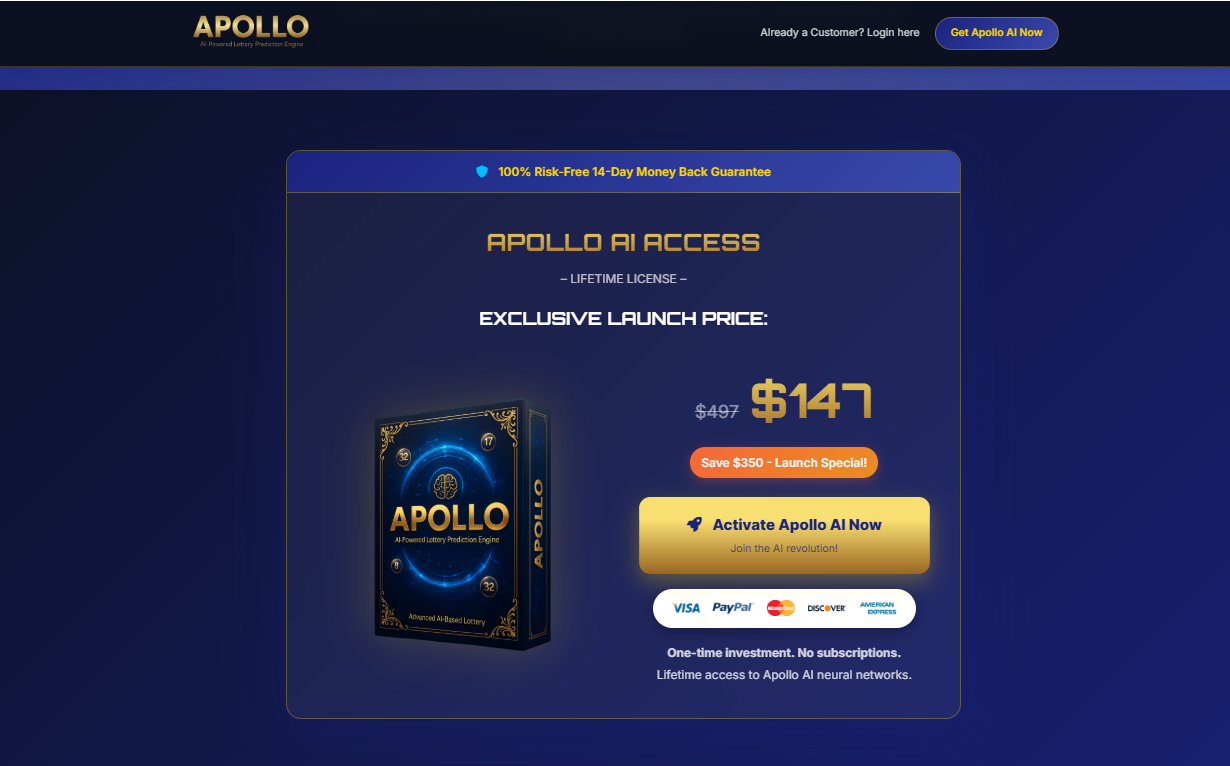

Apollo Intelligence and Number Selection
Choosing lottery numbers is one of the biggest challenges for players because there are usually countless possible combinations.
Apollo Intelligence is designed around the concept of making this process more structured.
Instead of selecting numbers completely at random, users may use analytical information to create their selections. For instance, someone might want a combination containing a balanced mixture of low and high numbers.
Another player might prefer to examine historical frequency data before making a choice.
The advantage here is not necessarily that the numbers become more likely to win. Rather, the advantage is that users have a framework for making their selections instead of choosing numbers without any system.
Understanding “Hot” and “Cold” Numbers
Lottery analysis frequently uses terms such as hot numbers and cold numbers.
A hot number generally refers to a number that has appeared relatively frequently during a particular historical period. A cold number refers to one that has appeared less frequently.
An AI-based platform can potentially calculate these classifications automatically.
For example, a historical dataset might show that a particular number appeared numerous times during recent draws. The system could highlight it as a high-frequency number.
But users should be careful about interpreting this information.
If a lottery is genuinely random, the fact that a number appeared several times previously does not necessarily make it more likely to appear next time. Likewise, a number that has not appeared for many draws is not automatically “due.”
This is sometimes called the gambler’s fallacy.
Apollo’s historical analysis can therefore be useful for understanding data, but historical patterns should not be confused with guaranteed predictive power.
Why Data Analysis Can Be Attractive to Lottery Players
The lottery is fundamentally a numbers game, which makes statistical analysis naturally appealing.
Many players enjoy studying previous results, comparing number frequencies, and developing their own selection strategies. An AI-based system can make this process more convenient.
Instead of manually collecting results and calculating frequencies, a specialized tool can potentially perform these tasks automatically.
For users interested in numerical analysis, this may make the lottery experience more engaging.
It can also encourage a more organized approach to number selection. Rather than choosing numbers solely because they are birthdays or personally meaningful dates, users can explore different mathematical characteristics.
Apollo Intelligence Features Users May Look For
Although features depend on the specific version or service being offered, a lottery intelligence platform may commonly include several useful analytical functions.
Historical Results Analysis
A system may provide access to historical results and allow users to examine previous drawings.
Frequency Analysis
Frequency tools can show how often individual numbers have appeared within a selected dataset.
Combination Generation
An automated generator can create potential number combinations based on selected preferences or analytical rules.
Pattern Visualization
Charts, tables, or graphical representations can make numerical information easier to understand.
Statistical Filters
Users may be able to filter combinations according to factors such as odd/even balance, number ranges, or repeated numbers.
Automated Recommendations
Some systems may provide suggested combinations based on their internal algorithms.
These features can make number research faster and more convenient, particularly for users who enjoy experimenting with different selection methods.
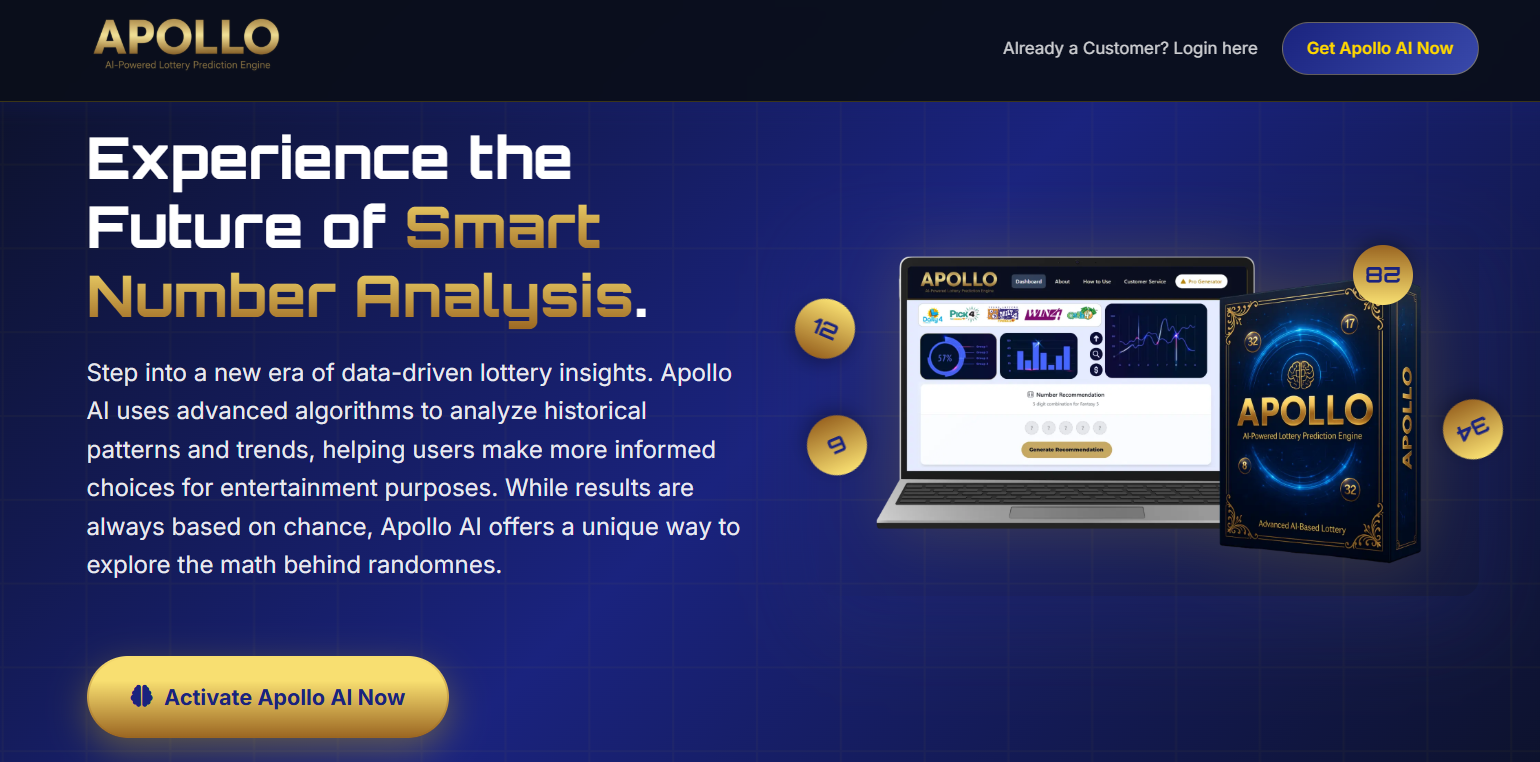
Can Apollo Intelligence Guarantee Lottery Wins?
This is perhaps the most important question.
No legitimate AI system should be treated as capable of guaranteeing lottery wins.
Lottery drawings are designed to produce unpredictable results. If the underlying drawing process is properly random, historical information cannot establish certainty about the next winning combination.
Even a highly sophisticated AI model cannot eliminate randomness.
Therefore, claims suggesting that an AI tool can guarantee winning lottery numbers should be treated with extreme caution.
Apollo Intelligence may provide analysis, suggestions, or number-generation capabilities, but users should understand the fundamental mathematical limitation: prediction is not the same as certainty.
Apollo Intelligence vs. Random Quick Picks
Many lottery players use automatically generated quick-pick numbers.
So why would someone consider an AI-based system?
The main difference is the selection philosophy.
A quick pick is generally generated randomly. An analytical engine may generate combinations using historical data, statistical rules, or user-defined criteria.
Neither approach can guarantee a winning ticket.
The choice ultimately depends on the user’s preference. Someone who simply wants a random selection may prefer a quick pick, while someone who enjoys studying numbers may find an analytical platform more interesting.
Potential Benefits of Apollo Intelligence
There are several reasons why an AI-powered lottery analysis platform could appeal to users.
1. Saves Time
Manually analyzing historical lottery results can be tedious. Automation can reduce the amount of work involved.
2. Organizes Large Amounts of Data
AI and statistical software can process extensive datasets and present relevant information in a structured manner.
3. Supports Different Selection Strategies
Users can experiment with frequency, number ranges, odd/even combinations, and other criteria.
4. Makes Analysis More Accessible
People without advanced statistical skills can potentially use automated tools to explore numerical information.
5. Adds an Analytical Element
For players who enjoy statistics, the analytical process can make lottery participation more engaging.
Limitations You Should Know
Despite the appeal of artificial intelligence, Apollo Intelligence has an important limitation shared by every lottery prediction system: the future draw remains uncertain.
Historical patterns can describe what happened previously. They cannot prove what will happen next.
Another limitation is overfitting. A sophisticated algorithm may discover patterns in historical data that appear meaningful but have no predictive value in future independent drawings.
This is particularly important with random events. A model can always find patterns in a sufficiently large dataset, but that does not mean those patterns represent a genuine advantage.
Users should therefore consider AI-generated lottery numbers as suggestions or analytical outputs, not guaranteed predictions.
Responsible Lottery Use
Any discussion about lottery prediction should also include responsible participation.
Lottery games involve financial risk. Players should only spend money they can comfortably afford to lose and should avoid treating lottery participation as a source of income.
An AI tool should never be used as a reason to spend beyond a predetermined budget.
It is also wise to avoid chasing losses. Losing previous draws does not mean that a future ticket is more likely to win.
A sensible approach is to establish a fixed entertainment budget and treat lottery participation accordingly.
Is Apollo Intelligence Worth Exploring?
For people interested in lottery statistics, Apollo Intelligence represents an interesting intersection between artificial intelligence and numerical analysis.
Its greatest potential value is not necessarily the promise of predicting a jackpot. Instead, it lies in providing a structured way to examine historical information, generate combinations, and explore different numerical strategies.
Users who enjoy data and probability may appreciate the convenience of an automated system.
However, expectations are important. No algorithm can remove the inherent randomness of a properly conducted lottery. AI can process information, identify historical patterns, and generate recommendations, but it cannot turn uncertain outcomes into guaranteed results.
Final Thoughts on Apollo Intelligence
Apollo Intelligence presents an intriguing concept: bringing AI-powered data analysis into lottery number selection. Its futuristic branding and emphasis on an “AI-Powered Lottery Prediction Engine” reflect the growing interest in using artificial intelligence for probability-based entertainment.
The concept can be appealing because it transforms number selection from a purely instinctive activity into a more organized analytical process. Historical data, number frequencies, combinations, and statistical filters can all provide interesting insights.
Nevertheless, users should maintain realistic expectations. Lottery outcomes are fundamentally uncertain, and no prediction engine should be considered a guaranteed path to winning. Previous results cannot reliably determine future independent draws.
Ultimately, Apollo Intelligence is best approached as an analytical and entertainment tool, rather than a guaranteed lottery-winning system. Used responsibly, it can make the process of exploring lottery numbers more systematic and engaging while reminding users of the most important principle of all: play responsibly, set a budget, and never spend money based on the expectation of a guaranteed win.